


My mother, Rivkah Chana Chava, grew up in a traditional Jewish household in Jamaica, Queens, during the 1950s and 60s. While the family wasn't fully observant, they kept a kosher home, and Jewish customs and values were an important part of daily life. She was especially close with her cousin, Priva Fischweicher, and the two were inseparable throughout their childhood.
One day, when the two girls were in high school, a Chabad rabbi came to their campus and invited all the Jewish students to attend a Shabbaton—a weekend retreat to experience a traditional Shabbat. My mother didn’t attend, but Priva did.
When Priva returned, she was transformed. Inspired by the experience, she began to take on more Jewish observances, including eating only kosher food. Her parents, however, did not keep a kosher home, and Priva began refusing to eat from their dishes. This change rippled through the family, raising eyebrows.
My grandmother was alarmed and sharply warned my mother: “Whatever you do in life, stay away from Chabad. It’s a cult. Just look at what it did to your cousin.”
That warning would echo in my mother’s mind for years to come.
Time passed. My mother married my father, Baruch, in 1969. My father had been raised in the Bronx in a secular home with no connection to Judaism. Together, they dreamed of building a large family.
In the mid 1970s, they settled in Long Island and had two children. But then came years of struggle; my mother couldn’t get pregnant again. She tried everything: diets, supplements, lifestyle changes. Nothing worked.
In 1978, word of her struggle spread among the family, and Priva reached out. She suggested my mother speak with a certain rabbi known for giving wise counsel. My mother asked where this rabbi was located. “Eastern Parkway, Brooklyn,” Priva replied.
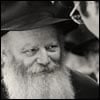
Immediately, my mother understood. It was the Lubavitcher Rebbe, Rabbi Menachem Mendel Schneerson.
The warning from her own mother came back loud and clear: Stay away from Chabad.
My mother politely declined, but Priva didn’t give up. Every so often, she’d call to check in, gently nudging my mother again: Just speak with the Rebbe.
Months went by. My mother’s hope of having more children faded. And finally, in a moment of desperation, she agreed. But only under one condition: she wouldn’t go to Crown Heights. She knew she didn’t dress according to their norms and didn’t want to feel out of place. So instead, she called Chabad headquarters.
Rabbi Hodakov, Chief of Staff for the Rebbe, answered. He listened patiently as my mother explained her situation, took notes, and told her he would deliver the message to the Rebbe personally. He promised someone would get back to her.
One month passed, then two, then three, and no word came. Life went on, and she forgot about the call. Then, unexpectedly, the phone rang. It was Rabbi Binyomin Klein, member of the Rebbe’s secretariat.
He told my mother that the Rebbe had received her message and was sending her a blessing—“a general blessing for hatzlacha, success.”
My mother was underwhelmed.
What does that even mean? she thought. Is there a tincture I should take? Should I be eating differently? Exercising? She needed action.
Rabbi Klein continued the conversation, asking about her two children—how old they were and what schools they attended. As they spoke, my mother suddenly heard the unmistakable sound of breathing on the line.
She interrupted Rabbi Klein. “Is someone else on the line from 770?”
“No,” he assured her, “it’s just us.”
Still uneasy, she asked him to hold. She walked around the house looking for my father, suspecting he might have picked up the other line. She found him outside mowing the lawn, nowhere near the phone.
She returned, agitated. “Someone else is on this call. I hear breathing. You’re lying to me.”
Again, Rabbi Klein calmly reassured her: “It’s just us. This is a private call.”
Then she heard a soft, clear voice: “This is Schneerson … ”
My mother froze. Everything—her mother’s warning, her longtime fear of Chabad, her skepticism—melted away.
The Rebbe continued speaking. “I didn’t just want to send you a general blessing for success,” he said. “I also wanted to give you a blessing for a large family.”
Then he asked her gently, “Do you light Shabbat candles?”
My mother admitted she hadn’t in a long time.
“Can you do a special mitzvah for me?” the Rebbe asked. “Start lighting Shabbat candles.”
She agreed.
That very Friday night, my mother lit Shabbat candles for the first time in years. A few weeks later, she found out she was pregnant.
And it didn’t stop there. Over the years, she would give birth to seven more children—ten in total.
Through it all, my mother never stopped growing her Jewish identity. She had her struggles, and there were times she forgot to light candles before sunset, but she never let that deter her from fulfilling the Rebbe’s request at the next opportunity. With time, she came to light them every week, without fail.
Many years later, in June 2010, she was placed in hospice care. It was a Friday afternoon, and she had begun to lose the ability to speak. Frightened, she asked if someone could stay with her. I offered.
As Shabbat approached, I checked a Jewish calendar to see the candle-lighting time. My mother began pointing at me, but I didn’t understand what she was trying to say. Then she waved her hands in front of her eyes, the motion a woman does when lighting Shabbat candles.
And I realized: even in her final hours, she wanted to fulfill the mitzvah she had promised the Rebbe all those decades earlier.
In hospice, we couldn’t use real flames, but I found two electric tea lights and placed them in front of her. She said the blessing—the final words I would ever hear from her.
A few days later, on the 3rd of Tammuz, the anniversary of the Rebbe’s passing, my mother’s soul returned to its Creator.
And what about my sister, Devorah, the third child—the first one born after that life-changing conversation? Devorah lived a life filled with meaning, inspiration, laughter, and unwavering love for family. And in a Divine echo of our mother’s journey, Devorah, too, passed away on the 3rd of Tammuz in 2024, as if our mother was waiting for her with open arms.



Join the Discussion